A full day with Claude Code: how the engineer’s day changed at its roots
This is not an article about “the future of programming”. It is the diary of a real team, in a real company, during an ordinary working week. Since Claude Code became a core tool for us, the question is no longer “does A…

This is not an article about “the future of programming”. It is the diary of a real team, in a real company, during an ordinary working week. Since Claude Code became a core tool for us, the question is no longer “does AI write code?” but “how do you manage an engineer who never sleeps, never gets bored, and is never shy to ask?”.
8:00 — the ticket opens in the terminal, not the editor
The first tangible change: we no longer start the day by opening files. We open a terminal and type an intent: “There is a memory leak in the WhatsApp webhook of the Arheb project. Find the cause, propose a fix, do not touch the database.” The agent reads the tree, traces the calls, and comes back with a map before writing a single line. The engineer reviews the map, not the code — a fundamental shift in the quality of attention.
10:00 — CLAUDE.md is the real contract
Our biggest lesson: the agent is exactly as good as the file it reads first. On the Smart Lead Tech website itself, CLAUDE.md explains the section structure, the RTL rules, and the definition of “done”. When we wrote it precisely, rejected reviews dropped by half. The agent does not guess your style; it applies it if you wrote it down.
Noon — review becomes a conversation, not a trial
Our rule: the agent opens the pull request, but a human types Approve. No exceptions.
What changed is the content of reviews. Instead of “name this variable better”, reviews are about decisions: why this cache TTL? Is this fallback safe if the API goes down? The agent answers with evidence from the code and edits while the discussion is happening.
15:00 — the boring work disappears
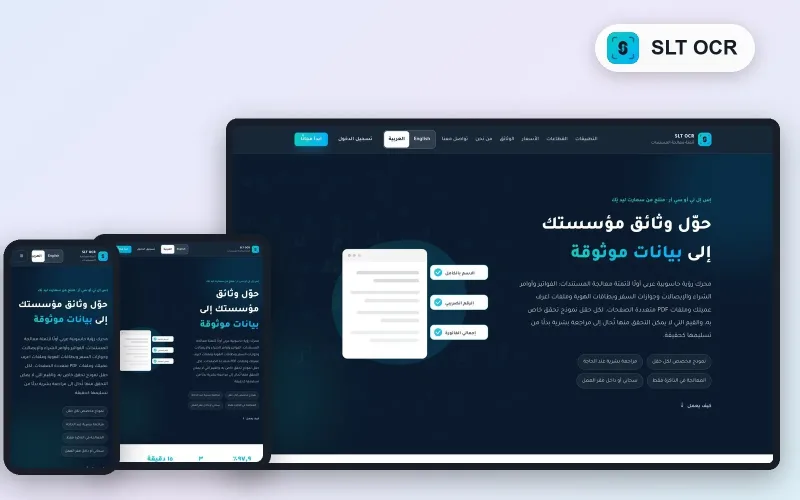
- Playwright tests for every route in SLT OCR after any UI change.
- Translating new i18n keys into Arabic and English in a tone consistent with what exists.
- Updating
DESIGN-STATUS.mdafter every landed section — a document that always used to die of neglect.
17:00 — what did not change?
Accountability. When production breaks, nobody asks the agent. So we built three fences around Claude Code: explicit permissions per command, an isolated sandbox for risky experiments, and a full log of everything executed. AI accelerates you in the direction you were already going — make sure the direction is right.
The summary, in numbers
Over one quarter: time from ticket to a reviewable PR dropped by roughly 40%, and the number of bugs reaching production did not rise. Nobody was replaced; the ceiling of what a small team can ship went up. For a company building fifty products across eight countries, that is the difference between “we must decline the project” and “we start next week”.